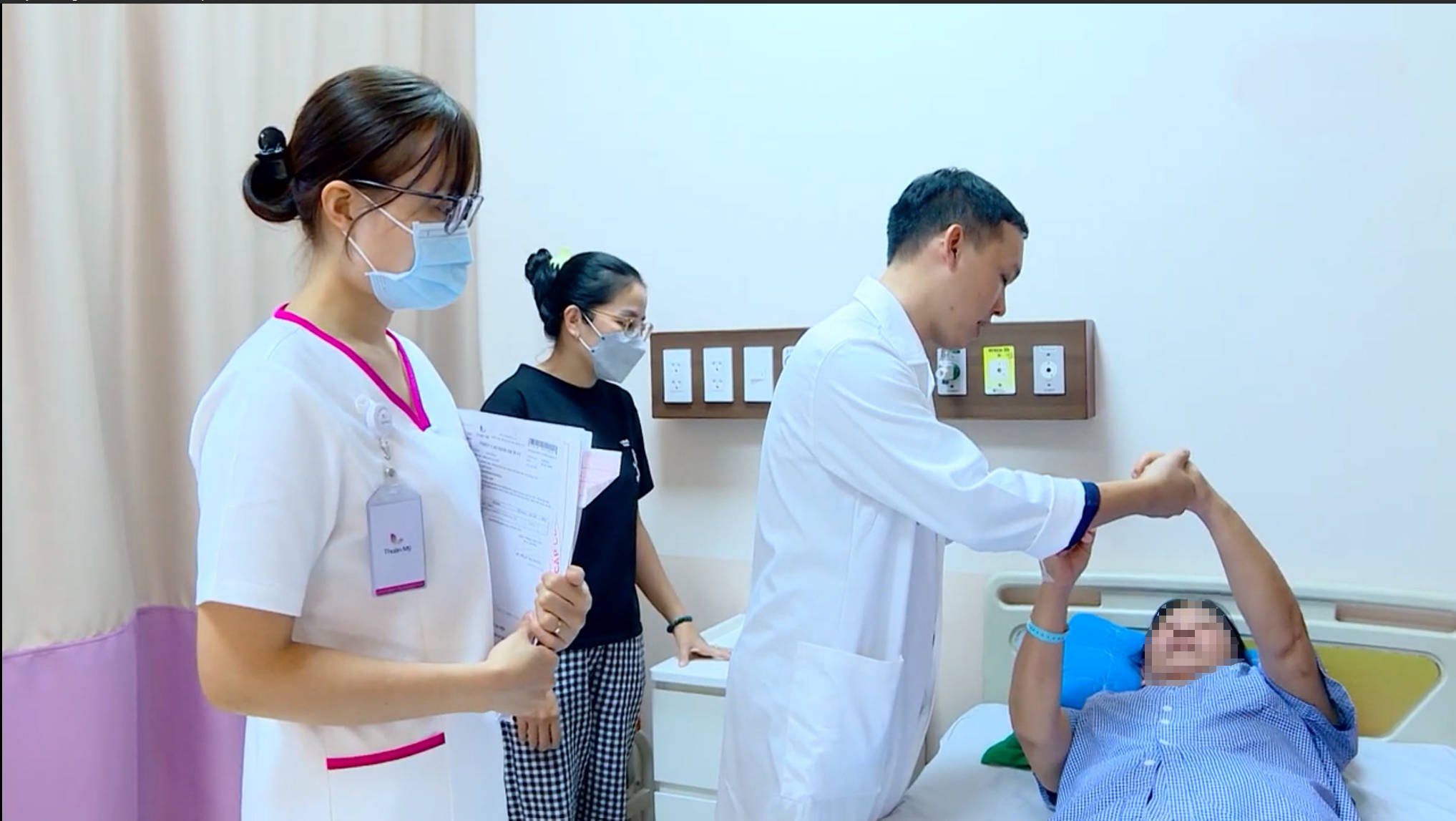


Recently, Thuan My ITO Dong Nai Hospital successfully admitted and treated a 72-year-old male patient who suffered from difficulty and prolonged urination, even having to urinate sitting down as he could not urinate standing up. After examination, the patient was diagnosed with benign prostatic hyperplasia and bladder neck stricture, leading to a large bladder stone causing lower urinary tract symptoms. Notably, the stone measured a “massive” 11cm x 8cm – one of the largest bladder stone cases ever recorded at the hospital, and perhaps even nationwide to date.
Meritorious Physician – Dr. Nguyen Van Truyen, Specialist Level II, Deputy Head of the Department of Surgery – Obstetrics – Inter-Specialties, served as the principal surgeon. Along with the surgical team, he performed an advanced “2-in-1” combined method, utilizing both endoscopic and minimal open surgery to ensure optimal treatment efficacy.
Endoscopic surgery was performed via the urethra to treat benign prostatic hyperplasia and bladder neck stricture. This method thoroughly addresses the cause of the stone, is minimally invasive, and reduces the risk of recurrence without requiring major open surgery.
In addition, minimal open surgery was performed above the pubic bone to remove the massive bladder stone because endoscopic lithotripsy via the urethra or percutaneous lithotripsy above the pubic bone was not feasible. A temporary bladder drain was also placed to manage the consequence of the large stone caused by lower urinary tract obstruction.
The 2-hour surgery was successfully completed. Thanks to the high skill and close coordination of the medical team, the patient recovered quickly, had good urination, and was discharged after 5 days of treatment and post-operative monitoring.
Dr. Nguyen Van Truyen, Specialist Level II, stated: Bladder stones can originate from kidney stones, passing through the ureter and down to the bladder. In such cases, the stones are small, less than 1.5 cm. Larger bladder stones are typically primarily caused by lower urinary tract obstruction, leading to lower urinary tract symptoms. Common causes of obstruction include benign prostatic hyperplasia in older men, bladder neck stricture, urethral stricture, bladder tumors, etc. Therefore, accurately identifying the cause for thorough treatment is crucial to help patients avoid the risk of stone recurrence.
Bladder stones not only cause discomfort in daily life but can also lead to dangerous complications such as recurrent cystitis, bladder tumors, hydronephrosis, and kidney failure if large stones compress the two ureteral orifices, preventing urine from reaching the bladder. Some warning signs of the condition to note are:
Difficulty urinating, painful urination, weak or interrupted urine stream.
Lower abdominal pain or pain radiating to the back.
Hematuria (blood in urine) or recurrent urinary tract infections.
With a team of highly qualified and skilled doctors, modern equipment, and advanced treatment methods, Thuan My ITO Dong Nai Hospital has become a reliable address for treating urinary tract diseases such as kidney stones, ureteral stones, bladder stones, urinary tract infections, kidney tumors, benign prostatic hyperplasia, bladder tumors, etc.
Through this case, the doctor recommends that people proactively undergo regular health check-ups, especially when unusual symptoms appear, to detect and treat dangerous urological conditions early and promptly